One of the most specific and unique prophecies in the Bible is Isaiah’s prophecy of King Cyrus the Great of Persia. At Isaiah 44:28-Isaiah 45:7, we read as follows:
“It is I [God] who says of Cyrus, ‘He is My shepherd, And he will carry out all My desire.’ And he says of Jerusalem, ‘She will be built,’ And of the temple, ‘Your foundation will be laid.’” This is what the LORD says to Cyrus His anointed, Whom I have taken by the right hand, To subdue nations before him And to undo the weapons belt on the waist of kings; To open doors before him so that gates will not be shut: “I will go before you and make the rough places smooth; I will shatter the doors of bronze and cut through their iron bars. I will give you the treasures of darkness And hidden wealth of secret places, So that you may know that it is I, The LORD, the God of Israel, who calls you by your name. For the sake of Jacob My servant, And Israel My chosen one, I have also called you by your name; I have given you a title of honor Though you have not known Me. I am the LORD, and there is no one else; There is no God except Me. I will arm you, though you have not known Me, So that people may know from the rising to the setting of the sun That there is no one besides Me. I am the LORD, and there is no one else, The One forming light and creating darkness, Causing well-being and creating disaster; I am the LORD who does all these things.”
(Emphasis added.)
First, it is important to understand the timeline. Isaiah prophesied and wrote between 740-700 BC. This was about 150 years before Cyrus the Great’s rise to power. Many important historical events occurred between 740 BC and the return of the Israelites to the Homeland and the rebuilding of the Temple (530 BC to 516 BC). The time period between 740 BC to 516 BC included the following events: (1) Assyria conquered Syria and the Northern Kingdom of Israel (722 BC); (2) Babylon conquered Assyria (612 BC): (3) Babylon conquered Judah and Jerusalem (605 BC – 586 BC), which included the destruction of the Temple; (4) Cyrus united Persia and Media (559 BC); (5) Cyrus and Persia conquered the Babylonians (539 BC); and (6) Cyrus issued a decree allowing the Jews to return to their Homeland in Judah and rebuild their Temple (538-537 BC). This was consistent with Cyrus’s policy across his empire of allowing conquered peoples to return to their homeland.[1]
The above Bible passages in Isaiah tell us many important ideas about God. Even though humans possess free will, God controls human history. God knows what and how humans are motivated. It is true that humans often express their disobedience and rebellion against God, but God made us, and He knows how we think, feel, and experience the world around us, and much like an owner training a pet, God can direct our steps and movements. Yet, we are still accountable for our sin and wrongdoing. In His sovereignty, God controls all things, but He does not force us to sin.
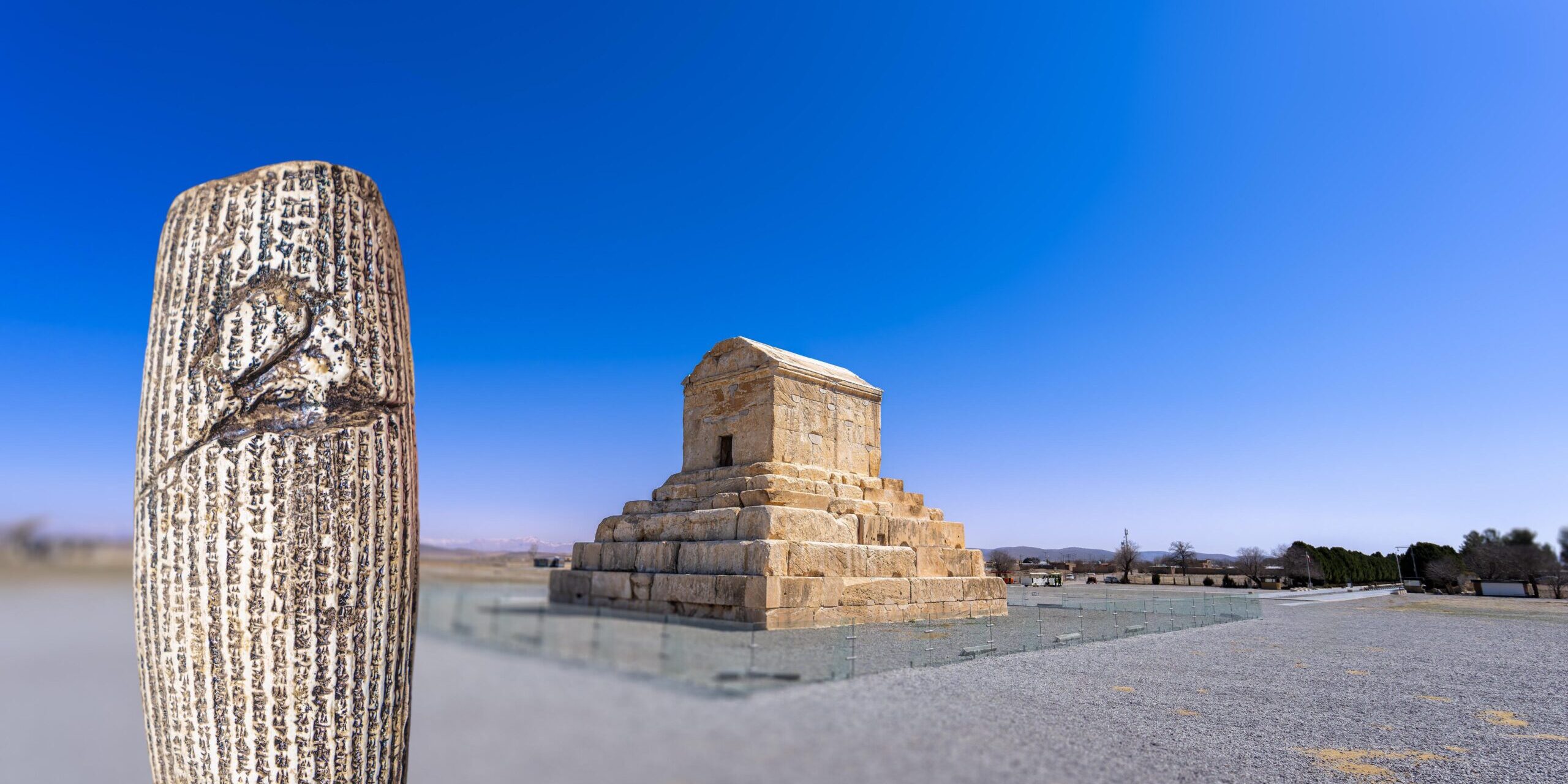
Much of Cyrus’s benevolence toward Israel was derived from Cyrus’s philosophical belief that conquered peoples should be allowed to return to their native homelands, rebuild their temples and practice their faith. In 1879, Hormuzd Rassam, working on behalf of the British Museum, discovered a clay artifact that became known as the Cyrus Cylinder during excavations in Babylon. Of great significance, the cylinder illustrates Cyrus’s unique imperial policy of (1) showing respect for local tradition, (2) restoring displaced communities, and (3) the use of tolerance to stabilize an empire.[2] Additionally, it should be noted that numbers of Jews demonstrated loyalty and skill in serving King Cyrus and other Persian kings, which encouraged the Persian kings to act favorably toward the Jews.
Of course, there are some critical scholars who do not believe or accept the authenticity of Isaiah’s prophecy about Cyrus. In fact, some believe that the second half of the Book of Isaiah must have been written by an unknown author many years later. However, there is no mention of the unknown author in Jewish writings during the next 700 years up to the time of Jesus Christ, when the Book of Isaiah was accepted by Jews and Christians as a single book written by Isaiah.
More than 250 years after the death of Isaiah, the scribe Ezra wrote the following:
Now in the first year of Cyrus king of Persia, in order to fulfill the word of the LORD by the mouth of Jeremiah [who, like Isaiah, prophesied that the Jews would return to the land of Israel], the LORD stirred up the spirit of Cyrus king of Persia, so that he sent a proclamation throughout his kingdom, and also put it in writing, saying: “This is what Cyrus king of Persia says: ‘The LORD, the God of heaven, has given me all the kingdoms of the earth, and He has appointed me to rebuild for Him a house in Jerusalem, which is in Judah.
Ezra 1:1-2
In closing, we need to highlight a few facts about Isaiah’s prophecy of King Cyrus: (1) The Lord wanted the Jews to be restored to the land and His Temple rebuilt. (2) The Lord wanted to identify Cyrus by his name. At Isaiah 45:3, we read, “The Lord, the God of Israel, who calls you [Cyrus] by your name.” Interestingly, the name “Cyrus” was not a common name at the time of the prophecy or the birth of Cyrus.[3] (3) At Isaiah 45:4, we read, “I have given you a title of honor, Though you have not known Me.” Cyrus did not have a personal relationship with the God of Israel, but God used King Cyrus to accomplish God’s purposes. (4) God used Cyrus to perform God’s will, “So that people may know from the rising to the setting of the sun that there is no one beside[Him]. [He is] the Lord, and there is no one else” (Isa. 45:6). God is the “one forming light and creating darkness, causing well-being and creating disaster; [He is] the Lord who does all these things” (Isa. 45:7).
[1] “Provide the timeline of historical events from 740 BC to 516 BC regarding Isaiah’s prophecy of Cyrus the Great” prompt. ChatGPT, GPT-4, Open AI, 20 Nov 2025, chat.openai.com/chat.
[2] “Tell me about Cyrus’s Cylinder that explained his policies toward resettling conquered peoples in their native homelands” prompt. ChatGPT, GPT-4, Open AI, 21 Nov 2025, chat.openai.com/chat.
[3] “Was the name Cyrus common when Isaiah prophesied or when Cyrus was born” prompt. ChatGPT, GPT-4, Open AI, 22 Nov 2025, chat.openai.com/chat.