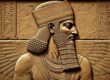
The Bible contains various prophecies of unique, powerful antagonists against God’s people. For example, Daniel prophesied around 605 BC – 530 BC about King Antiochus Epiphanes, who ruled between 175-164 BC and greatly oppressed the Jewish people (Daniel, 8, 11). Antiochus outlawed Jewish practices like circumcision, Torah reading, and Sabbath observance. Ultimately, Antiochus erected an altar of Zeus in the Jewish Temple. His oppression of the Jews ignited the Maccabean Revolt.
Around AD 51, the Apostle Paul wrote two letters to the Thessalonian Church, which had a reputation of faithfulness (1 Thess. 1:2-3). At 2 Thessalonians 2:3-4, Paul wrote that the Man of Lawlessness will oppose God, exalt himself as a god, and take his seat in or among the Temple of God. The Greek preposition eis can be defined as “into, towards, or among.”[1] As we will see, the Man of Lawlessness rules among God’s temple. The Apostle Paul specifically described God’s people as God’s Temple (1 Cor. 3:16-17; 2 Cor. 6:16; Eph. 2:19-22). Additionally, the Apostle Paul described the Man of Lawlessness as being restrained, coming in the power of Satan, and practicing deception (2. Thess. 2:6-8, 11-12). In my opinion, the Man of Lawlessness was historically fulfilled in Nero Caesar, who ruled Rome from AD 54 to AD 68. In the Book of Revelation, Nero was identified as the Beast (Rev. 13). It is also my opinion that the physical return of Jesus Christ will probably be preceded by a future Man of Lawlessness, who will uniquely oppress the people of God in a similar way that Nero oppressed Christians before the destruction of Jerusalem in AD 70.
In my book Eyes to See the Revelation (2019), I provided a description of Nero and how he fulfilled the profile of the Beast of Revelation and the Man of Lawlessness. In Chapter 17, I wrote:
During the first three decades of Christianity, the Romans viewed Christianity as a sect of Judaism. As discussed earlier, Judaism was a legal religion (religio licita[2]). Interestingly, after his first arrest in Jerusalem, Paul successfully appealed to Rome (Nero), and he was released in AD 61 or 62.[3]
It is of some interest as to what happened after Paul’s release in AD 62. What caused the change in attitude toward Christians? The great fire in Rome started on July 19, AD 64.[4] It destroyed a significant portion of Rome.[5] Nero was technically out of town at the time of the fire, but everyone suspected that Nero was the cause. The masses thought Nero was trying to make room for one of his new building projects.[6] The ancient historian Tacitus recorded that regardless of what Nero said or did, Nero could not overcome the general belief that he was the cause of the fire.[7] To combat the rumors, Nero blamed the Christians.[8] The ancient historian Tacitus referred to Christianity as a “deadly superstition” that originated from a man called Christus, who lived in Judea.[9] Tacitus explained that the “deadly superstition” had made its way to Rome, a place where most every evil flowed and was relished by the people.[10] Tacitus said that a great number of Christians were convicted, not necessarily for the crime of arson, but because of a general belief that the Christians were guilty of the “hatred of mankind.”[11] In other words, Christian beliefs and doctrines were an affront to the Roman gods and the general lifestyle of many pagan Romans.
Christians were crucified, torn apart by wild dogs, set on fire, and used as human torches to decorate Nero’s parties.[12] While the Christians burned, Nero paraded through his garden parties dressed in the costume of a charioteer.[13] Tacitus said that eventually the people of Rome started to feel some sympathy for the Christians.[14] Not, in their minds, because the Christians were not deserving of some horrible punishment, but because the Christians were being murdered primarily to placate Nero’s cruelty.[15]
Nero was a megalomaniac[16] with a significant inclination toward cruelty. He walked in darkness, full of hatred. He was a Chaos Monster. A man consumed with himself, who rejects all authority but his own, becomes an ugly distortion of what a man was intended to be. Over time, Nero became more and more bestial. He was not an accomplished military commander, and he cared little for the issues of practical governance. Nero loved to literally perform on a stage,[17] which was strange for a Roman Emperor. He sang, played instruments, recited poetry, acted, and raced chariots. He considered himself a great artist. He yearned for the praise of an audience.
His mother, Agrippina, was a domineering woman who lusted for power.[18] After she had plotted to overthrow her brother Emperor Caligula, Agrippina was banished to an island in the Mediterranean.[19] The tyrant Caligula was assassinated in AD 41.[20] With the backing of the Praetorian Guard, Emperor Claudius succeeded Caligula, ruling from AD 41 to 54.[21] Emperor Claudius was more grounded in the affairs of practical governance.[22] However, it is of significant interest that in AD 44, Claudius ordered all Jews to leave Rome because of civil unrest associated with a person named “Christus” (Christ) (Acts 18:1–4).[23] At that time, the Roman authorities did not make a distinction between the Jews and Christians. The civil unrest was viewed as an internal Jewish dispute that had gotten out of control. At this point, the Advocates of the Old Covenant were not yet successful in prejudicing Roman authority against the Christians.
Claudius invited his niece Agrippina to return from exile. She came back to Rome (accompanied with her son, Nero) where she ultimately married Emperor Claudius.[24] In AD 50, Claudius adopted Nero (age 13) as his son. To assure that her son would be crowned Emperor, Agrippina poisoned Emperor Claudius with mushrooms,[25] and he died on October 13, AD 54. Nero once teased that mushrooms were the food of the gods and by them Claudius became a god.[26] Thereafter, Agrippina often reminded her son that he owed everything to her.[27] Despite her lust for power, Agrippina was far more practical and disciplined than her son. She gathered advisers to guide the 16-year old Emperor.[28] Buress was the new prefect of the Praetorian Guard, and Agrippina chose the philosopher Seneca (4 BC – AD 65) to be Nero’s primary adviser.[29] Seneca had previously been Nero’s tutor. In the early years of his reign, Nero shared de facto power with his mother and was effectively channeled and restrained by Seneca.[30] It is interesting to note that when Nero formally received his powers and honors from the Senate, he modestly turned down the title “Father of His Country,” but he made sure to obtain the title “Son of a God.”[31]
After the death of Claudius, Nero’s primary threat came from his step-brother Brittanicus, the natural son of Claudius.[32] Brittanicus was a few years younger than his older step-brother.[33] Nero sought to dominate Brittanicus by sodomizing him over many years.[34] In AD 55, Nero invited his family to a party where Nero most likely poisoned his younger brother.[35] As Brittanicus choked to death, Nero watched with disinterest, suggesting that his brother must have been suffering from epilepsy.[36]
At Agrippina’s direction, in AD 53, Nero married Octavia, daughter of Claudius.[37] Even though she was attractive, Nero found her boring.[38] He started philandering with concubines and the wives of various Senators.[39] Marcus Salvius Otho was Nero’s party companion and guide to the seedy Roman underworld.[40] Eventually, Nero chose Poppaea Sabina to be his mistress. Nero fell in love with the beautiful Poppaea Sabina in AD 58.[41] Unfortunately, she was the wife of his good friend Otho.[42] Instead of killing Otho, and in consideration of their friendship, Nero banished Otho to Spain where he was appointed to a governorship in Spain.[43] Of course, Nero was still married to his first wife Octavia.[44] However, Nero’s mother, Agrippina, strongly disapproved of Poppaea, and she continued to try to exert control over Nero. Nero did not like to be regulated or controlled by anyone. In AD 59, Nero had his mother executed.[45] First, he tried to drown her with an elaborate collapsible boat.[46] Offering some additional insight into his evil character, Nero, then age 21, had invited his mother to be his guest of honor at dinner.[47] They talked into the early morning hours.[48] He told his mother that he ruled because of her.[49] He embraced her, kissed her, and escorted her to the collapsible yacht and her intended death.[50] However, on this occasion, she escaped death, being saved by some local fishermen, but she could not escape the hit squad later dispatched by Nero to assassinate his mother.[51] After returning to Rome, Nero celebrated his mother’s death by staging various gladiatorial games and entertainments. The Roman attendees (most with knowledge of Agrippina’s death) were given the opportunity to enjoy some blood sport and to win incredible prizes of jewels and gold.[52] In this way, all participated in the death of Nero’s mother and the destruction of their own souls.[53]
After the death of Agrippina, the influences of Seneca and Burris were greatly diminished. Seneca was effectively terminated as Nero’s chief adviser in AD 60 (and forced to commit suicide in AD 65).[54] Burris died in AD 62 from throat cancer.[55] Without their influence, Nero became more and more unstable. Nero divorced Octavia and banished her to an island.[56] Thereafter, Nero married Poppaea.[57] After false charges of adultery were leveled against Octavia, Nero ordered the beheading of Octavia in AD 62.[58] Nero then presented the head of Octavia to Poppaea as a gift.[59] Professor Albert A Bell opines that Poppaea may have encouraged Nero to persecute Christians.[60] Poppaea was a Gentile that had adopted the Jewish faith.[61] Josephus recorded that Poppaea once intervened on behalf of some Jewish Priests to free them from prison.[62]
As further proof of the deranged cruelty of Nero, he killed Poppaea in AD 65.[63] In a fit of rage, he kicked her to death, while she was ill and pregnant.[64] Historian and author Tom Holland notes that Nero had come home late from the games, and Poppaea started to nag Emperor Nero.[65] He then, not meaning to kill her, kicked her in her swollen stomach, causing her death.[66] Still loving her, Nero buried Poppaea with honors and declared her a goddess.[67]
After the death of Poppaea Sabina and the crushing of an assassination plot against him in AD 65,[68] Nero focused on his career as a performer and the rebuilding of Rome. He had performed in Naples and Rome to thunderous applause, winning every contest.[69] Thereafter, accompanied by a fleet of ships, in the fall of AD 66, he traveled to Corinth to perform in the famous Isthmian Games.[70] Huge crowds gathered to watch the sporting events and theatrical productions. In Rome, many of the upper class looked down on actors as little better than prostitutes.[71] It was an art form that seemed to promote an effeminacy so contrary to Roman manliness.[72] On the other hand, Nero saw no shame in acting, even when portraying a woman writhing in pain as she gave birth to her child.[73]
Of course, Nero could not find a suitable replacement for Poppaea Sabina. It must have been hard to overcome the image of kicking your pregnant wife and future heir to death. He desperately wanted to find a mate similar to his dead wife. Ultimately, he found a young boy named Sporos (who was castrated for Nero) who looked a lot like his dead wife.[74] Sporos accompanied Nero on his trip to the Isthmian Games.[75]
Despite his focus on the Olympics and Sporos, other hugely significant events were occurring around the Roman world. The Jewish revolt was ignited in the fall of AD 66. Of course, Nero could not be distracted from a singing contest or chariot race, and therefore, he dispatched Vespasian to address the rebellion.[76] Then Nero heard rumblings of revolt by Governor Vindex in Gaul and a possible conspiracy with Governor Galba in Spain.[77]
After the Isthmian Games, Nero returned to Rome as a conquering hero.[78] He had won many, if not most, of the contests.[79] Even after he wrecked his chariot, the organizers believed that Nero should be awarded the victor’s wreath.[80] Great crowds and banners proclaiming his victory greeted Nero, the hero, when he returned to Rome.[81]
In March of AD 68, Vindex announced his revolt in Gaul.[82] After one night of drinking, Nero revealed his plan to confront Vindex.[83] He would appear before his enemies unarmed, and with tears and crying instead of violence, Nero would subdue the rebellion.[84] Nero believed that after his show of emotion, the combatants would rejoice and sing hymns of victory together.[85] However, Nero then heard that Galba had joined the revolt, and he promptly fainted.[86] With Galba’s support, others were encouraged to join the revolt, as well. Otho, Nero’s old friend and the former husband of Poppaea, threw his support to Galba.[87] Thereafter, Africa joined in the revolt.[88] After much consternation and self-doubt, Nero finally, with the aid of an assistant, committed suicide on June 9, AD 68.[89] Civil war raged across the Roman Empire for the next year.[90]
The ancient historian Suetonius (AD 70 to 160) wrote that Nero “showed neither discrimination nor moderation in putting to death whomsoever he pleased on any pretext whatsoever.”[91] Nero forced 400 Senators and 600 equestrians to fight in the arena.[92] Nero participated in homosexual rape and torture.[93] Pliny, the Elder (AD 23–79) referred to Nero as a “destroyer of the human race” and “the poison of the world.”[94] Church historian Philip Schaff described Nero as “a demon in human shape.”[95] Around AD 55, Nero had a huge 110 to 120 foot statue of himself erected in the Temple of Mars, which essentially declared Nero to be a god.[96] As a god, Nero was accountable to no one but himself.
After reading about Nero, it is easy to feel sick at one’s stomach or experience the desire to take a shower. Some may wonder if Nero was insane or mentally ill. Unfettered human desire can be very destructive to self and others. In some cases, an entire nation can be destroyed. Whether a believer or unbeliever, approbation lust, power lust, material lust, and sexual lust (among many others) can distort and twist the human soul until only a beast remains, a creature oriented to the Earthly, no matter how sophisticated it may think of itself.
* * *
John ended Revelation Chapter 13 with an interesting riddle. The one with wisdom and understanding was invited to calculate the name of the first Beast (Rev. 13:18). The number of the Beast was the number of a man, and his number was 666 (Rev. 13:18). Personally, I credit Dr. Kenneth L. Gentry for opening my eyes to the identity of the Beast of Revelation.[97] In the ancient world, letters of the alphabet could also function as numbers.[98] Riddles employing hidden names were common. The Greeks called it isopsephia.[99] The Jews called it gimatriya.[100]. Modern scholars call them cryptograms.[101] A Hebrew spelling of Nero Caesar was Nrwn Qsr (pronounced: Neron Kaiser).[102] Gentry explained, “Archeological finds have documented that a First Century Hebrew spelling of Nero’s name provides precisely with the value of 666.”[103] N=50, r=200, w=6, n=50, Q=100, s=60, and r=200, totaling 666.[104]
Finally, it should be pointed out that Nero was the “man of lawlessness” referred to in 2 Thessalonians 2:1–12. As previously discussed, “the coming of our Lord Jesus Christ and our gathering together to Him” (2 Thess. 2:1) described the Lord’s coming in judgment of ad 66–70, together with the gathering and separating of His faithful people from apostate Israel. The true nature of Nero was not apparent as long as he was under the direction and guidance of Seneca and Burris. During the first years of his rule, Nero’s lawlessness (megalomania) was hidden from the people (2 Thess. 2:8). At the same time, there was a growing apostasy among the people of God. Believers were falling away from their faith (Heb. 2:1; 2 Thess. 2:3). More and more, Nero exalted himself above God (2 Thess. 2:4). He was accountable to no one but himself. On the other hand, during his first imprisonment, Paul had found many receptive to the message of Christ, even among Nero’s own household. Paul’s “imprisonment in the cause of Christ [had] become well known throughout the whole praetorian guard and to everyone else” (Phil. 1:13). Yes, Nero was living among the new Temple of God (2 Thess. 2:4). This is another example of how the over-literalization of Scripture can miss the proper interpretation. Paul clearly taught that believers are the new Temple of God (Eph. 2:21).
(Smith, T. Kenan. Eyes to See The Revelation: A Spiritual Journey. WestBow Press, 2019, pp. 134-139, 142-143.)
[1] “G1519 – eis – Strong’s Greek Lexicon (nasb20).” Blue Letter Bible. Web. 3 Dec, 2025. <https://www.blueletterbible.org/lexicon/g1519/nasb20/mgnt/0-1/>.
[2] Gentry, Jr., Kenneth L. The Beast of Revelation. American Vision, 2002, pp. 62–63.
[3] Gentry, pp. 62–63.
[4] Gentry, pp. 16, 67.
[5] Gentry, p. 16.
[6] Gentry, pp. 16–17.
[7] Bell, Jr. Albert A. Exploring the New Testament World. Thomas Nelson Publishers, 1998, p. 65.
[8] Bell, p. 65.
[9] Bell, p. 65.
[10] Bell, p. 65.
[11] Bell, p. 65.
[12] Bell, p. 65.
[13] Holland, Tom. Dynasty: The Rise and Fall of The House of Caesar. iPad Ed. Doubleday, 2015, p. 467 of 628.
[14] Bell, p. 65.
[15] Bell, p. 65.
[16] Potter, David. The Emperors of Rome: The Story of Imperial Rome from Julius Caesar to the Last Emperor. Quercia, 2013, p. 75.
[17] Potter, p. 75.
[18] Holland, pp. 418–419 of 628.
[19] Holland, p. 423 of 623.
[20] Potter, p. 70.
[21] Potter, pp. 71–75.
[22] Potter, pp. 71–75.
[23] Bell, p. 65.
[24] Potter, pp. 74–75.
[25] Potter, p. 75.
[26] Holland, p. 422 of 628.
[27] Holland, p. 422 of 628.
[28] Potter, pp. 75–76.
[29] Holland, p. 419 of 628
[30] Holland, p. 428 of 628.
[31] Holland, pp. 421–422 of 628.
[32] Holland, p. 431 of 628.
[33] Bell, p. 64.
[34] Holland, p. 431 of 628.
[35] Holland, p. 431 of 628.
[36] Holland, p. 431 of 628.
[37] Holland, p. 429 of 628.
[38] Holland, pp. 459–460 of 628.
[39] Potter, p. 76.
[40] Holland, p. 430 of 628.
[41] Holland, p. 438 of 628.
[42] Holland, pp. 438–439 of 628.
[43] Holland, p.439 of 628.
[44] Gentry, p.16.
[45] Bell, p. 65; Potter, p. 76.
[46] Holland, pp. 440–441 of 628.
[47] Holland, pp. 440–441 of 628.
[48] Holland, p. 441 of 628.
[49] Holland, p. 441 of 628.
[50] Holland, p. 441 of 628.
[51] Holland, p. 442 of 628.
[52] Holland, p. 444 of 628.
[53] Holland, p. 444 of 628.
[54] Gentry, pp. 13–14.
[55] Holland, p. 459 of 628.
[56] Gentry, p. 16.
[57] Gentry, p. 16.
[58] Gentry, p. 16.
[59] Holland, p. 460 of 628; Gentry, p. 16.
[60] Bell, p. 66.
[61] Bell, p. 66.
[62] Bell, p. 66.
[63] Gentry, p. 16.
[64] Gentry, p. 16.
[65] Holland, p. 482 of 628.
[66] Holland, p. 482 of 628.
[67] Holland, p. 482 of 628.
[68] Holland, pp. 476–479 of 628.
[69] Holland, p. 486 of 628.
[70] Holland, p. 486 of 628.
[71] Holland, p. 490 of 628.
[72] Holland, p. 490 of 628.
[73] Holland, p. 491 of 628.
[74] Holland, p. 492 of 628.
[75] Holland, p. 494 of 628.
[76] Holland, pp. 495–496 of 628.
[77] Holland, p. 496 of 628.
[78] Holland, p. 499 of 628.
[79] Potter, p. 79.
[80] Holland, pp. 496–497 of 628.
[81] Holland, pp. 498–499 of 628.
[82] Holland, pp. 500–501 of 628.
[83] Holland, p. 500 of 628.
[84] Holland, p. 500 of 628.
[85] Holland, p. 500 of 628.
[86] Holland, pp. 501–502 of 628.
[87] Holland, p. 501–502 of 628.
[88] Gentry, p. 17.
[89] Holland, pp. 506–507 of 628.
[90] Gentry, pp. 95, 110.
[91] Gentry, p. 52.
[92] Gentry, p. 52.
[93] Gentry, p. 52.
[94] Gentry, p. 52.
[95] Gentry, p. 18.
[96] Gentry, pp. 81–82.
[97] Gentry, p. 7.
[98] Ibid, pp. 38–42.
[99] Ibid.
[100] Ibid.
[101] Ibid, p. 38.
[102] Ibid.
[103] Ibid, 42
[104] Ibid.